
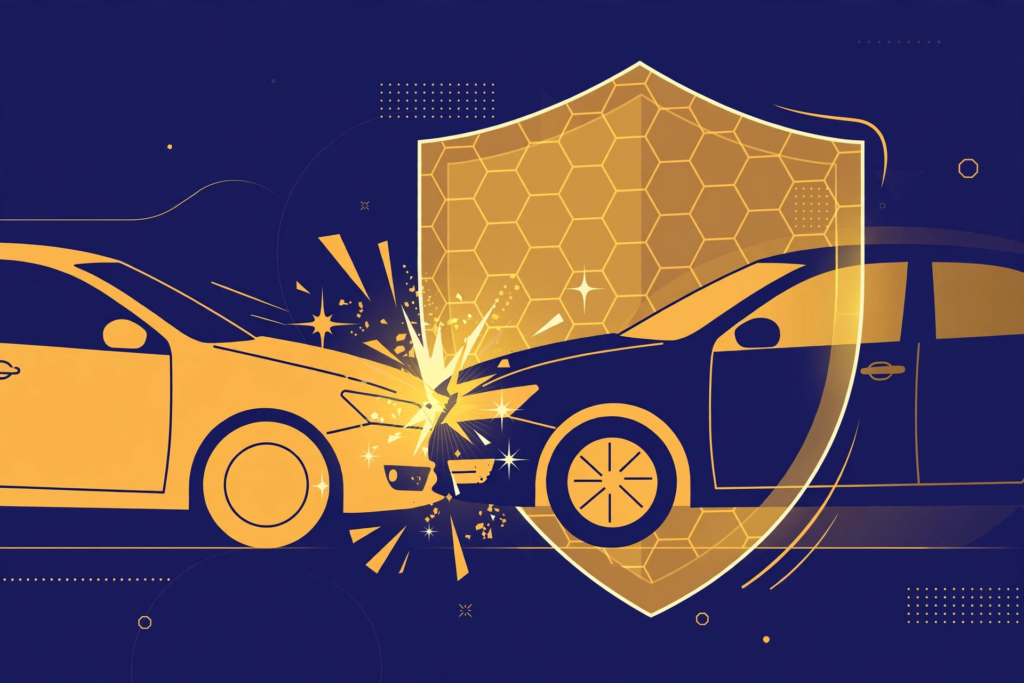
Collision coverage is one of the two pillars of what people call “full coverage” — and one of the most misunderstood. It pays to repair or replace *your* car when it’s damaged in a crash, regardless of who caused it. If liability insurance protects other people from you, collision coverage protects your own vehicle from the road. Here’s exactly what it covers, what it doesn’t, and how to decide whether you still need it.
What Collision Coverage Is
Collision coverage pays for damage to your vehicle resulting from a collision — with another car, a pole, a guardrail, a tree, a pothole, or even a rollover. It applies whether you were at fault or not, which is its key advantage over relying on the other driver’s liability insurance: you don’t have to wait for fault to be determined or chase the other party’s insurer.
Collision coverage at a Glance
What is collision coverage? Learn what collision insurance covers, how deductibles work, and when you need it — or can drop it. Below, we break down collision coverage in detail so you can act with confidence.
Table of Contents
- Collision coverage at a Glance
- What Collision Coverage Is
- What Collision Coverage Covers
- What Collision Coverage Does NOT Cover
- Collision vs Comprehensive: The Difference
- When You’re Required to Carry It
- When It Makes Sense to Drop Collision
- Choosing Your Deductible
- Frequently Asked Questions
- The Bottom Line
Every collision policy carries a deductible — the amount you pay out of pocket before insurance kicks in. Common choices are $500 and $1,000. If repairs cost $4,000 and your deductible is $500, the insurer pays $3,500. If damage is below your deductible, you cover it yourself.
What Collision Coverage Covers
- Crashes with other vehicles — rear-end collisions, intersection accidents, sideswipes, whether you’re at fault or the other driver is.
- Single-car accidents — hitting a guardrail, pole, tree, mailbox, or building.
- Hit-and-run damage — in many states, damage from an unidentified driver falls under collision (in others, uninsured motorist property damage handles it — check your state).
- Rollovers — if your vehicle flips, collision covers the damage.
- Pothole and road-hazard damage — severe pothole strikes that damage wheels, tires, or suspension.
The payout is capped at your car’s actual cash value (ACV) — what it was worth just before the crash, accounting for depreciation — minus your deductible. Insurers won’t pay more than the car was worth.
What Collision Coverage Does NOT Cover
Just as important as what’s included:
- Damage to other people’s vehicles or property — that’s liability coverage’s job.
- Your medical bills — handled by PIP, MedPay, or health insurance depending on your state.
- Theft, vandalism, fire, weather, or animal strikes — those fall under comprehensive coverage.
- Mechanical breakdowns and wear and tear — insurance covers sudden accidental damage, not maintenance.
- Personal belongings inside the car — laptops, phones, and cargo aren’t covered; renters or homeowners insurance may help.
- Diminished value — the loss in resale value after repairs generally isn’t paid under your own collision coverage.
Collision vs Comprehensive: The Difference
These two are constantly confused. The simple rule: collision covers crashes; comprehensive covers almost everything else that can damage a parked or driven car. Hit a deer? Comprehensive. Hit a pole swerving to miss the deer? Collision. Hailstorm dents? Comprehensive. Fender bender in a parking lot? Collision. They’re sold separately, priced separately, and can carry different deductibles.
When You’re Required to Carry It
Collision coverage is optional under state law — no state mandates it. But two very common situations require it contractually:
- Auto loans. Lenders require collision (and comprehensive) until the loan is paid off, because the car is their collateral.
- Leases. Leasing companies similarly require it for the lease term.
If you drop required coverage, the lender can force-place expensive insurance and bill you for it — always check before making changes.
When It Makes Sense to Drop Collision
For an older, paid-off car, collision coverage can cost more than it’s worth. Consider dropping it when:
- The premium exceeds the potential payout. Get quotes with and without collision. If you’re paying several hundred dollars a year to protect a car worth $2,500 (minus a $1,000 deductible), the math is poor.
- You could comfortably replace the car out of pocket. If writing a check for a replacement wouldn’t wreck your finances, self-insuring the vehicle’s value is rational.
- The car has minimal market value. A common rule of thumb: when the annual collision premium approaches a large fraction of the car’s value minus the deductible, it’s time to reconsider.
Keep liability coverage regardless — dropping collision never affects your legal obligation to cover damage you cause to others.
Choosing Your Deductible
Higher deductibles mean lower premiums. Moving from $500 to $1,000 is one of the quickest ways to trim a bill — but only choose a deductible you could actually pay tomorrow from savings. A deductible that forces you onto a credit card after a crash defeats the purpose. Revisit the choice yearly as your emergency fund grows.
Frequently Asked Questions
Is collision coverage required by law?
No state requires it. It’s optional unless your lender or leasing company mandates it — which they almost always do until the loan or lease ends.
Does collision coverage pay if someone else hits me?
Yes. Collision covers your car’s damage regardless of fault. If the other driver is at fault, you can also pursue their liability insurance — many people use their own collision coverage for faster repairs and let insurers sort out reimbursement.
What’s the difference between collision and liability insurance?
Liability pays for damage and injuries *you cause to others*. Collision pays to repair *your own car* after a crash. Liability is legally required; collision is optional (unless a lender requires it).
Should I keep collision on a 10-year-old car?
It depends on the car’s value versus the premium. Get a quote without collision and compare the savings to the car’s actual cash value minus your deductible. If the savings are substantial relative to the potential payout, dropping it is often the smart move.
Does collision cover hitting an animal?
Generally no — animal strikes fall under comprehensive coverage. But if you swerve to avoid an animal and hit a guardrail, that impact is typically a collision claim. (Safest is usually to brake firmly rather than swerve.)
The Bottom Line
Collision coverage is your financial shield against the cost of crashes — yours or anyone else’s fault. It’s essential for financed or leased cars and valuable for any vehicle worth protecting, but it’s not forever: as cars age and depreciate, the premium-to-payout math eventually favors dropping it. Review the decision every year or two, keep your deductible matched to your savings, and compare quotes — because the price of collision coverage varies dramatically from one insurer to the next.
For official guidance on collision coverage, see the Insurance Information Institute’s coverage guide. And if this breakdown helped, the related guides below go deeper on collision coverage saving strategies you can use right away.