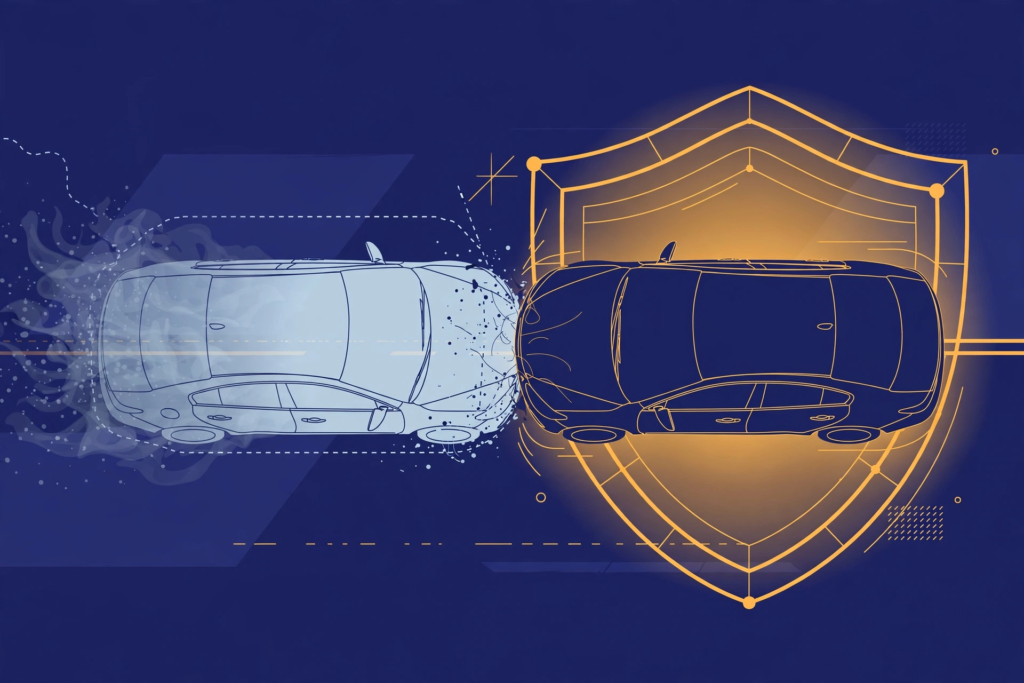
You did everything right: you carry insurance, you drive carefully, and then someone with no insurance crashes into you. Being hit by an uninsured driver is infuriating — but it is far more common than most people realize, and you have more options than you might think. The key is knowing which coverage responds and acting quickly.
How Common Are Uninsured Drivers?
Despite mandatory insurance laws in nearly every state, a meaningful share of drivers on US roads carry no insurance at all. Estimates vary by state — some states have uninsured rates well into the double digits. That means the odds of encountering an uninsured driver over a lifetime of driving are uncomfortably high. This is not a rare edge case; it is a mainstream risk, and your policy should be built around it.
Hit by uninsured driver at a Glance
Hit by an uninsured driver? Learn your options — uninsured motorist coverage, suing the driver, and how to protect yourself next time. Below, we break down hit by uninsured driver in detail so you can act with confidence.
Table of Contents
Immediate Steps After Being Hit by an Uninsured Driver
Treat It Like Any Serious Accident
Safety first: check for injuries, call 911 if needed, and move to a safe location. Then:
- Call the police. This is critical. An official report documenting that the other driver was uninsured strengthens every option available to you.
- Exchange information anyway. Get the driver’s name, contact details, license number, and vehicle information. An uninsured driver still has identity — and potential liability.
- Document everything. Photos of damage, the scene, license plates, and the other driver’s documents (or lack thereof). Note exactly what the driver says about their insurance status.
- Do not accept cash offers at the scene. Uninsured drivers sometimes offer to “pay out of pocket.” These promises are rarely honored, and accepting one can complicate your claim.
Notify Your Insurer Promptly
Tell your own insurance company what happened, including the fact that the other driver appears uninsured. Your insurer will guide you on which of your coverages applies and may investigate the other driver’s insurance status independently.
Your Coverage Options
Uninsured Motorist Bodily Injury (UMBI)
This is your most important protection. UMBI pays for medical bills, lost wages, and pain and suffering for you and your passengers when the at-fault driver has no insurance. It essentially steps into the shoes of the liability coverage the other driver should have had. If you carry high UM limits, a serious injury caused by an uninsured driver does not have to become a financial catastrophe.
Uninsured Motorist Property Damage (UMPD)
Available in many states, UMPD pays for damage to your vehicle caused by an uninsured driver — often with a lower deductible than collision coverage. Note that some states only offer uninsured motorist coverage for bodily injury, not property damage, so check what your state allows.
Collision Coverage
Your collision coverage pays for your car repairs regardless of who was at fault, including uninsured-driver accidents. You will owe your deductible, but your insurer may try to recover it from the at-fault driver. If UMPD is not available in your state, collision is your primary vehicle-damage protection.
Medical Payments / Personal Injury Protection
MedPay and PIP pay medical expenses regardless of fault. They are useful for immediate bills while your UM claim is being processed, and they can cover deductibles and copays your health insurance leaves behind.
Your Health Insurance
Do not forget your health insurance as a backstop for injuries. It pays according to its own terms, and your UM coverage can help with what it does not cover. Coordinate benefits carefully and keep records of everything.
Can You Sue an Uninsured Driver?
Yes — being uninsured does not shield a driver from liability. You can sue the at-fault driver personally for your damages. Practical considerations:
- Collectability is the issue. Many uninsured drivers have limited assets, which is why they are uninsured in the first place. A judgment you cannot collect is a hollow victory.
- Small claims court works well for property damage within your state’s dollar limits — no lawyer needed, minimal cost.
- Wage garnishment and liens are possible in some states if you win a larger judgment, but the process is slow.
- An attorney consultation is worthwhile for serious injuries. Many personal injury lawyers work on contingency and can assess whether the driver has recoverable assets.
In practice, your own uninsured motorist coverage is usually the faster, more reliable path to compensation than suing. That is precisely what it is for.
What If the Driver Is Underinsured?
A closely related problem: the at-fault driver has insurance, but their limits are too low to cover your losses (state minimums often are). Underinsured motorist (UIM) coverage fills the gap between their limits and your actual damages. UM and UIM are frequently sold together, and carrying both at robust limits is one of the smartest coverage decisions you can make.
Protecting Yourself Before It Happens
You cannot control whether other drivers buy insurance, but you can control your own protection:
- Carry uninsured/underinsured motorist coverage with limits that match your liability limits — not the state minimum. This is the single most important step.
- Keep collision coverage on any vehicle you cannot afford to repair or replace yourself.
- Add MedPay or PIP even if your state does not require it; the cost is usually modest.
- Consider a dashcam — footage proving the other driver’s fault makes UM claims smoother.
- Review your policy annually. Life changes, and coverage that was adequate three years ago may not be today.
Frequently Asked Questions
What happens if I’m hit by an uninsured driver?
Your own uninsured motorist coverage responds: UMBI for injuries and UMPD (where available) for vehicle damage. Your collision coverage can also repair your car, and MedPay/PIP covers medical bills. You can additionally sue the at-fault driver personally.
Will my rates go up if I file an uninsured motorist claim?
Generally, no — or very little. UM claims are not-at-fault claims, and most insurers (and many state laws) treat them accordingly. You should not be penalized for another driver’s decision to drive uninsured.
Is uninsured motorist coverage required?
It depends on your state. Some states require it; others require insurers to offer it (you can reject it in writing); a few leave it fully optional. Even where it is optional, it is strongly recommended.
Can I sue an uninsured driver for damages?
Yes. The driver’s lack of insurance does not eliminate their liability. However, collecting can be difficult if they lack assets, which is why your own UM coverage is usually the more practical remedy.
What is the difference between uninsured and underinsured motorist coverage?
Uninsured motorist (UM) coverage applies when the at-fault driver has no insurance at all. Underinsured motorist (UIM) coverage applies when they have insurance but their limits are too low to cover your losses. They are typically bundled together.
The Bottom Line
Being hit by an uninsured driver feels deeply unfair — but with the right coverage, it does not have to be financially devastating. Uninsured/underinsured motorist coverage exists for exactly this moment. Check your policy today: if your UM limits are at the state minimum, consider raising them to match your liability limits. And if you have just been hit by an uninsured driver, file your UM claim promptly, document everything, and then take a few minutes to compare quotes — making sure your next policy has the UM protection this experience just proved you need.
For official guidance on hit by uninsured driver, see the Insurance Information Institute’s claims guide. And if this breakdown helped, the related guides below go deeper on hit by uninsured driver saving strategies you can use right away.
Shopping for hit by uninsured driver? Start by comparing quotes from at least three insurers — drivers who compare save significantly on hit by uninsured driver every year.