
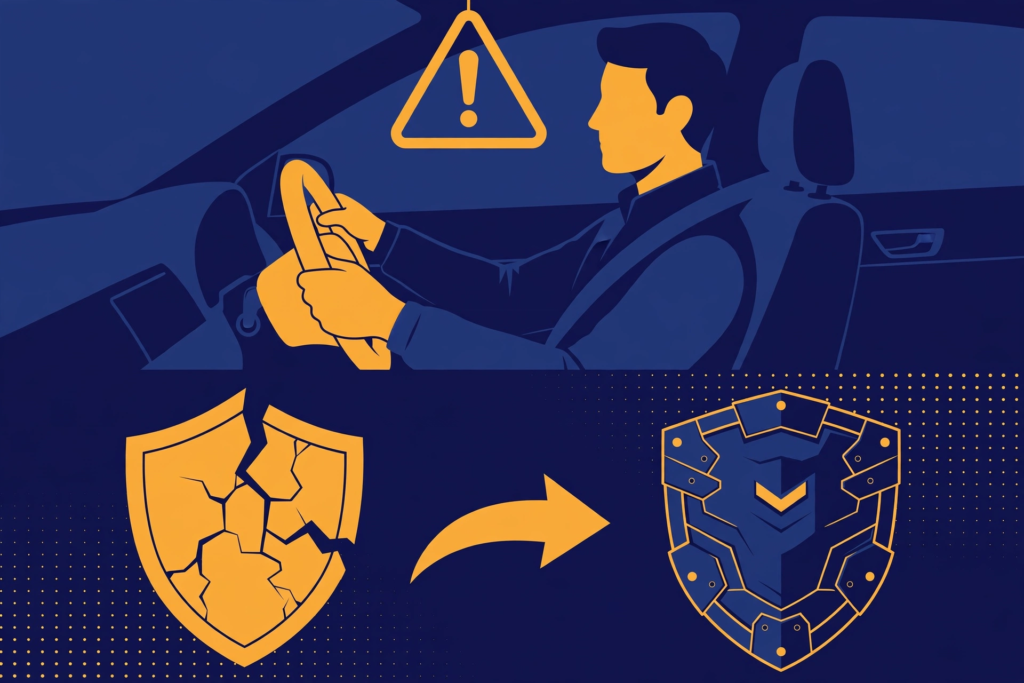
Not every driver fits the profile that mainstream insurers want. If you have a DUI, multiple at-fault accidents, a suspended license, or several years of coverage lapses, you may hear a familiar phrase from standard carriers: “we can’t offer you a policy.” That is where non standard car insurance comes in. It is a legitimate segment of the auto insurance market built specifically for drivers who are considered high risk — and understanding it can save you from going uninsured.
This guide explains who needs non standard car insurance, how it works, what it costs, and the steps you can take to eventually graduate back to standard coverage and lower rates.
Non standard car insurance at a Glance
Denied by standard insurers? Non standard car insurance covers high-risk drivers. Learn who needs it, what it costs, and how to get back to standard rates. Below, we break down non standard car insurance in detail so you can act with confidence.
Table of Contents
- Non standard car insurance at a Glance
- What Is Non Standard Car Insurance?
- Who Needs Non Standard Car Insurance?
- How Non Standard Car Insurance Differs from Standard Coverage
- What Does Non Standard Car Insurance Cost?
- How to Graduate Back to Standard Car Insurance
- Finding a Non Standard Car Insurance Carrier
- Frequently Asked Questions
What Is Non Standard Car Insurance?
The auto insurance market is divided into tiers. Standard insurers cover drivers with clean or mostly clean records at competitive rates. Non standard car insurance is the tier designed for drivers whose risk profile falls outside standard underwriting guidelines. These carriers specialize in high-risk policies and price their products accordingly.
Non-standard policies are real, regulated insurance policies. They carry the same basic structure as standard policies — liability, collision, comprehensive, and other coverages — and they satisfy your state’s financial responsibility laws. The difference is mainly in underwriting flexibility and price. Non-standard carriers are willing to insure drivers that standard companies turn away, and they charge higher premiums to offset the higher expected claims costs.
Some well-known national insurers operate non-standard divisions or subsidiaries under different brand names, and many independent agents specialize in placing high-risk drivers with these carriers.
Who Needs Non Standard Car Insurance?
You might end up in the non-standard market for several reasons. The most common triggers include:
- DUI or DWI convictions — even a single DUI can push you out of the standard market for several years
- Multiple at-fault accidents — a pattern of claims signals higher future risk to underwriters
- Serious moving violations — reckless driving, excessive speeding, or hit-and-run charges
- License suspension or revocation — insurers view suspensions as a major red flag
- Lapses in coverage — long gaps with no insurance, especially if your license was active
- SR-22 or FR-44 filing requirements — many non-standard carriers routinely handle these filings
- New drivers with no insurance history — in some cases, very young or brand-new drivers start in the non-standard tier
- Poor credit-based insurance scores — in states where this factor is allowed, it can affect tier placement
It Is a Tier, Not a Scarlet Letter
Being in the non-standard market is not permanent. Most drivers enter it after a specific event — an accident, a violation, a lapse — and with time, a clean record, and continuous coverage, they qualify for standard rates again. Think of non standard car insurance as a bridge, not a destination.
How Non Standard Car Insurance Differs from Standard Coverage
Underwriting and Eligibility
Non-standard carriers use more lenient underwriting. Where a standard insurer might automatically decline an application with two at-fault accidents, a non-standard carrier will quote it — just at a higher price. They are set up to evaluate risk at a finer level and to issue policies that standard systems would reject outright.
Policy Terms and Payment
Because the risk is higher, non-standard policies often come with shorter policy terms — commonly six months, and sometimes as short as one or three months. Many non-standard carriers also require larger down payments and may not offer the monthly billing flexibility that standard insurers provide. If you are used to paying month to month with a small down payment, expect that to change.
Available Discounts and Features
Non-standard policies typically offer fewer discounts. Usage-based or telematics programs may still be available through some carriers, which is worth asking about — demonstrating safe driving through a telematics program can sometimes accelerate your return to standard rates. But loyalty, bundling, and accident-free discounts are often limited or absent in this tier.
What Does Non Standard Car Insurance Cost?
Premiums in the non-standard market are meaningfully higher than standard rates — sometimes dramatically so. Exactly how much higher depends on your driving record, the violations involved, your age, your vehicle, your location, and the limits you choose. A driver with a single DUI may pay noticeably more than a standard rate; a driver with multiple serious violations and a suspension may pay several times more.
The important thing is that price varies widely between non-standard carriers, just as it does in the standard market. Because these carriers have different appetites for different kinds of risk, one company might quote a high-risk driver a rate that another company would beat by a wide margin. Shopping around matters even more here than in the standard tier.
How to Keep Non-Standard Costs as Low as Possible
- Carry only the coverage you need — state minimum liability plus what your lender requires; skip extras like rental reimbursement unless you need them
- Raise your deductible — a higher collision and comprehensive deductible lowers premiums, but make sure you can afford it if you file a claim
- Choose a modest vehicle — expensive or high-performance cars cost more to insure in every tier
- Maintain continuous coverage — lapses keep you in the non-standard tier longer
- Ask about telematics — safe driving data can help your case with some carriers
- Take a defensive driving course — required or not, it signals responsibility and may earn a small discount
How to Graduate Back to Standard Car Insurance
The non-standard tier is usually temporary. Here is the path back:
Step 1: Keep Continuous Coverage
Never let your policy lapse. Continuous coverage is one of the strongest signals to underwriters that you are a responsible policyholder. Set up automatic payments so a missed bill never creates a gap.
Step 2: Keep Your Record Clean
Every month that passes without a new violation or at-fault accident improves your profile. Most surcharges from violations and accidents fade from rating calculations over three to five years, depending on the state and the offense.
Step 3: Satisfy SR-22 or FR-44 Requirements Fully
If the state requires an SR-22 or FR-44 filing, maintain it for the entire required period without interruption. A canceled filing can trigger a license suspension and reset the clock.
Step 4: Re-Shop Regularly
Do not assume your current carrier will automatically move you to a standard rate. Once violations age past three years or more, get quotes from standard insurers again. Many drivers stay in expensive non-standard policies longer than necessary simply because they never re-shopped.
Step 5: Improve the Other Rating Factors
Work on your credit-based insurance score where it is used, reduce annual mileage if your lifestyle changed, and consider bundling home or renters insurance once a standard carrier accepts you.
Finding a Non Standard Car Insurance Carrier
Not every agent writes non-standard business, so look for one who does. Independent insurance agents are often the best resource because they work with multiple carriers and can match your specific risk profile — DUI, multiple accidents, lapse, or suspension — to the non-standard insurer with the best appetite for it. There are also agencies that specialize exclusively in high-risk drivers and SR-22 filings.
When comparing quotes, look at the total cost including down payment and installment fees, not just the headline premium. Ask each agent which violations are driving your rate and when they will stop affecting it — that tells you when to start shopping the standard market again.
Frequently Asked Questions
What is non standard car insurance?
Non standard car insurance is a tier of auto insurance for high-risk drivers who do not meet standard underwriting guidelines — for example, drivers with DUIs, multiple at-fault accidents, license suspensions, or long coverage lapses. It provides the same legal coverage as standard policies but at higher premiums.
Is non standard car insurance legal and legitimate?
Yes. Non-standard carriers are licensed and regulated by state insurance departments just like standard insurers. Their policies satisfy state minimum insurance requirements and are accepted by lenders, courts, and DMVs.
How long will I need non standard car insurance?
It depends on the reason you are there. Many drivers graduate back to standard rates within three to five years of clean driving and continuous coverage. Some may qualify sooner; serious violations like DUIs can take longer to fade from rating.
Can I get an SR-22 with non standard car insurance?
Yes. Non-standard carriers routinely handle SR-22 and FR-44 filings. In fact, if you need an SR-22, a non-standard carrier is often the fastest route to getting one filed so your license can be reinstated.
Will non standard car insurance cover me like a normal policy?
Yes. Non-standard policies offer the same coverage types — liability, collision, comprehensive, uninsured motorist, and others. The differences are in price, policy terms, payment options, and available discounts, not in the fundamental protections.
Being labeled high risk is frustrating, but it is not the end of affordable car insurance. Non standard car insurance keeps you legally covered while you rebuild your record, and every clean month brings you closer to standard rates. The worst thing you can do is let coverage lapse out of sticker shock — continuous insurance is your fastest ticket back to the standard market.
Compare quotes from multiple non-standard carriers and independent agents who specialize in high-risk drivers. Then set a reminder to re-shop every six to twelve months, because the day your record qualifies for standard rates again, you should not be paying non-standard prices.
For official guidance on non standard car insurance, see the National Association of Insurance Commissioners. And if this breakdown helped, the related guides below go deeper on non standard car insurance saving strategies you can use right away.