
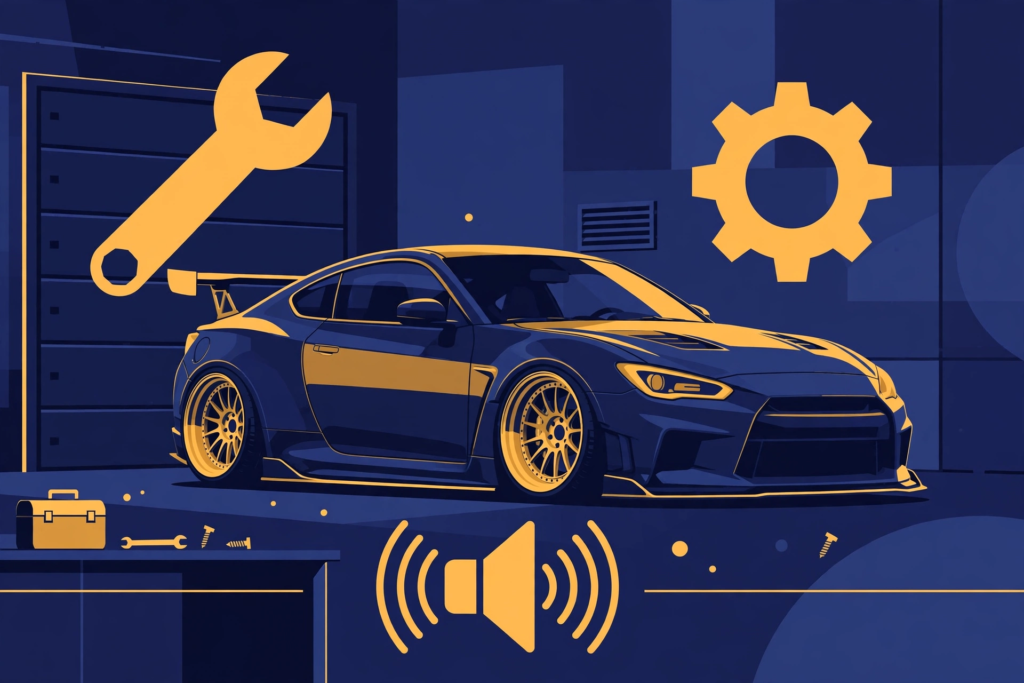
You’ve spent real money on aftermarket wheels, a premium stereo system, custom paint, or a lift kit — but did you know your standard auto insurance policy probably doesn’t cover any of it? Most standard policies only insure your vehicle in its factory condition, which means expensive custom equipment coverage may be the missing piece of your protection.
Custom equipment coverage (sometimes called custom parts and equipment coverage, or CPE) is an optional add-on that extends your collision and comprehensive coverage to aftermarket parts and accessories. If you’ve modified your car, truck, SUV, or motorcycle, here’s what you need to know.
Custom equipment coverage at a Glance
Custom equipment coverage insures aftermarket parts, stereos, wheels and more. Learn what it covers, what it costs, and who needs it. Below, we break down custom equipment coverage in detail so you can act with confidence.
Table of Contents
What Is Custom Equipment Coverage?
Custom equipment coverage is an endorsement you add to your auto insurance policy. It pays to repair or replace permanently installed aftermarket parts and equipment that were not part of the vehicle when it left the factory — up to the coverage limit you select.
Without this endorsement, your collision and comprehensive coverage typically reimburses based on the value of a stock vehicle. That $3,000 sound system, $2,500 set of wheels, or $4,000 custom paint job would not be covered in a theft or accident claim.
What counts as “custom equipment”?
- Wheels and tires: aftermarket rims, custom tires, lift kits, suspension upgrades
- Audio and electronics: premium stereos, subwoofers, amplifiers, custom navigation, dash cameras (hardwired)
- Exterior modifications: custom paint, body kits, spoilers, roof racks, bed liners, light bars
- Performance parts: turbochargers, custom exhaust systems, engine modifications
- Interior upgrades: custom upholstery, racing seats, specialty lighting
- Accessibility modifications: wheelchair lifts, hand controls, and other adaptive equipment
Note that accessibility modifications are sometimes handled under separate provisions — ask your insurer how adaptive equipment is treated.
What Custom Equipment Coverage Typically Covers
CPE coverage generally applies under the same circumstances as your collision and comprehensive coverage:
- Accidents: collision damage to your aftermarket parts when you hit another vehicle or object
- Theft: stolen aftermarket wheels, stereos, or equipment
- Vandalism: damage to custom paint or body work
- Weather and other comprehensive events: hail, fire, falling objects, and similar perils damaging your custom parts
Most insurers sell CPE in fixed limit bands — commonly $1,000 to $5,000 of additional coverage, with some companies offering higher limits for heavily modified vehicles. You choose the limit when you add the endorsement.
What’s usually NOT covered
- Mechanical breakdown: CPE covers damage from covered perils, not wear and tear or engine failure
- Portable electronics: phones, tablets, and removable GPS units usually fall under homeowners or renters insurance, not CPE
- Non-permanently installed items: equipment that isn’t bolted or wired in may be excluded
- Performance modifications that affect safety: some insurers won’t cover (or will surcharge) certain engine or suspension modifications
- Racing: damage from organized racing or speed contests is almost always excluded
How Much Does Custom Equipment Coverage Cost?
CPE is one of the more affordable optional coverages. Because the limits are relatively small, the premium add-on is typically modest — many drivers find it adds only a small amount to their overall premium. The exact cost depends on:
- The coverage limit you choose ($1,000 vs. $5,000)
- The total value of your modifications
- Your vehicle’s make, model, and year
- Your driving record and location
When you add the endorsement, be prepared to document your modifications. Many insurers ask for:
- Photos of the vehicle and the custom parts
- Receipts or appraisals showing the value of the equipment
- A list of all modifications with approximate costs
This documentation protects you at claim time — without proof of what was installed, adjusting a CPE claim can become a dispute.
Who Needs Custom Equipment Coverage?
Consider adding CPE if any of these describe you:
1. You’ve invested significantly in aftermarket parts. If your modifications cost more than a few hundred dollars total, standard coverage leaves a real gap.
2. You drive a customized truck, SUV, or Jeep. Lift kits, oversized tires, and off-road accessories are expensive to replace and squarely in CPE territory.
3. You’re an audio enthusiast. High-end sound systems are among the most common CPE claims, especially for theft.
4. You have a show car or project car. Custom paint alone can cost more than the car’s book value — CPE is essential here.
5. You’ve added accessibility equipment. Adaptive equipment is expensive and specialized; make sure your policy explicitly covers it.
If your only “modification” is floor mats and a phone mount, you almost certainly don’t need this endorsement.
Alternatives to consider
- Agreed value or stated value policies: for classic, collector, or heavily modified vehicles, a specialty policy that insures the car for an agreed value may cover modifications more comprehensively than CPE on a standard policy.
- Homeowners or renters insurance: portable items (cameras, laptops, removable audio gear) are usually better covered here.
How to Add Custom Equipment Coverage
Adding CPE is straightforward:
1. Inventory your modifications. List every aftermarket part with its approximate value. Dig up receipts.
2. Take photos. Photograph the vehicle from multiple angles, with close-ups of the custom equipment.
3. Call your insurer or agent. Ask specifically for “custom parts and equipment” coverage and available limits.
4. Choose a limit that matches your investment. If you’ve spent $4,000 on modifications, a $1,000 CPE limit leaves you underinsured.
5. Review at renewal. If you add more modifications later, update the endorsement — CPE limits don’t automatically grow with your project.
One important caveat: some insurers are pickier than others about modified vehicles. A few may decline to insure heavily modified cars at all, or may require you to go through a specialty insurer. Shop around if your current company won’t accommodate your build.
Frequently Asked Questions
Does my standard policy cover any aftermarket parts?
Usually only to a very small degree — many policies include a nominal amount (often around $1,000) for custom equipment, or none at all. Read your policy’s exclusions section to see exactly where you stand.
Will custom equipment coverage raise my rates a lot?
Generally no. CPE limits are small relative to the overall policy, so the premium impact is typically modest. The bigger rate question is whether your insurer surcharges for the modifications themselves.
Do I need receipts for a CPE claim?
Receipts, photos, and appraisals make claims dramatically smoother. Without documentation, the adjuster has to verify what was installed and what it was worth — which invites disputes.
Is custom equipment coverage available for motorcycles?
Yes — and it’s popular with riders, since aftermarket exhausts, chrome, saddlebags, and custom paint are common. The same documentation advice applies.
What if my insurer won’t offer CPE for my modified car?
Specialty insurers that focus on modified, classic, and high-performance vehicles often provide broader coverage, including agreed-value policies. An independent agent can help you find one.
Protect Your Investment
If you’ve put time and money into customizing your vehicle, custom equipment coverage is the inexpensive bridge between your standard policy and the real value sitting in your driveway. Document your mods, pick a limit that matches your investment, and make sure your policy reflects the car you actually drive — not just the one that rolled off the assembly line.
Compare car insurance quotes today and ask each insurer about custom parts coverage — the right endorsement can save you thousands if the worst happens.
Rules and rates change, so double-check the details of custom equipment coverage with the Insurance Information Institute’s coverage guide. For more ways to save, keep reading the guides linked below.