
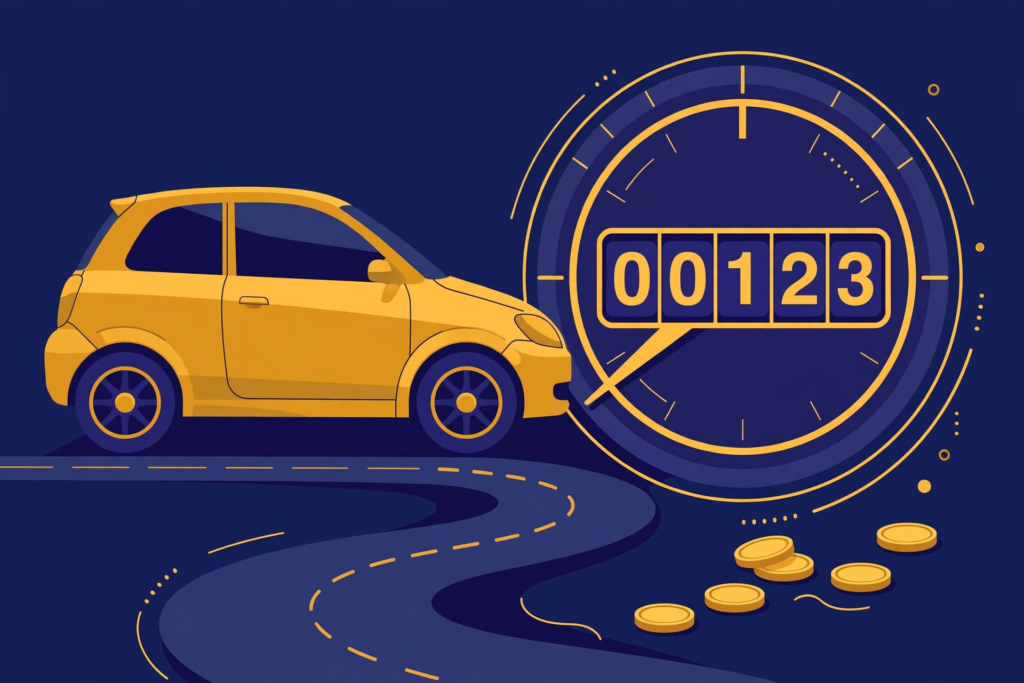
If your car spends more time parked than moving, you may be overpaying for car insurance. Insurers price risk largely on exposure — the more miles you drive, the more chances you have to crash. Flip that around, and low-mileage drivers are some of the safest bets an insurer can take. The low mileage car insurance discount exists to price that reality.
Remote workers, retirees, city dwellers with short commutes, and owners of second vehicles are all prime candidates. This guide explains how the low mileage discount works, what counts as “low mileage,” how insurers verify it, and how to make sure you are not leaving money on the table in 2026.
Low mileage car insurance discount at a Glance
Drive less than average? Learn how the low mileage car insurance discount works, who qualifies, and how to prove your mileage in 2026. Below, we break down low mileage car insurance discount in detail so you can act with confidence.
Table of Contents
What Is the Low Mileage Car Insurance Discount?
The low mileage discount is a premium reduction for drivers whose annual mileage falls below a threshold set by the insurer. It reflects a straightforward actuarial fact: fewer miles driven means fewer opportunities for accidents, which means fewer claims.
Most insurers define “average” annual mileage around 12,000 to 15,000 miles. Drive meaningfully less than that — many insurers set the discount threshold somewhere under 10,000 miles per year, with deeper savings at even lower levels — and you may qualify. The exact cutoffs vary by company, and some use graduated tiers rather than a single threshold.
It is worth distinguishing the traditional low-mileage discount from its cousins:
- Low-mileage discount: a flat rating discount based on your estimated annual miles, no tracking required.
- Usage-based/telematics insurance: a program that monitors actual driving behavior and mileage via app or plug-in device, adjusting your rate accordingly.
- Pay-per-mile insurance: a policy where you pay a base rate plus a per-mile charge — ideal for very low-mileage drivers.
All three reward driving less; they just measure it differently.
Who Qualifies?
You are a strong candidate for a low mileage car insurance discount if:
- You work from home — remote and hybrid workers often drive far less than traditional commuters.
- You are retired — retirees frequently log well under average annual mileage.
- You have a short commute — living close to work, school, or daily errands keeps miles down.
- You own a second or pleasure vehicle — weekend cars, convertibles, and classics often qualify for limited-use or low-mileage rating.
- You use public transit — city drivers who mainly use trains or buses and drive only occasionally.
- Your driving dropped recently — a job change, move, or lifestyle shift that cut your miles should be reflected in your policy.
If any of these describe you but your policy still shows a standard mileage estimate, you are likely overpaying.
How Insurers Verify Your Mileage
Insurers use several methods, depending on the company and the discount type:
- Self-reported estimates. Many insurers simply ask for your estimated annual mileage at quote time and at renewal. Answer honestly — underreporting can cause problems at claim time if the discrepancy is large.
- Odometer readings. Some insurers request periodic odometer photos or readings to confirm your estimate.
- Telematics apps or devices. Usage-based programs measure mileage precisely, along with driving behavior. This is the most accurate verification method and often unlocks the deepest savings.
- Service records. Maintenance visits and inspections create a paper trail of odometer readings that insurers can reference.
The trend in 2026 is toward verified mileage through telematics, but traditional self-reported low-mileage discounts remain widely available for drivers who prefer not to be tracked.
How Much Can You Save?
Savings depend on how far below average your mileage falls and which insurer you choose. Drivers who barely use their cars — a few thousand miles a year — can see some of the most dramatic reductions available from any single discount, particularly through pay-per-mile programs designed for very low usage.
Even modest reductions help: dropping from 15,000 to 8,000 estimated miles per year can produce a noticeable premium difference at many insurers. The key is that the savings scale with the mileage reduction — the less you drive, the more you save.
Getting the Discount: Step by Step
1. Estimate your real mileage. Check oil-change stickers, inspection records, or your car’s trip computer to calculate actual annual miles. Do not guess wildly — accuracy matters.
2. Ask your insurer. Call and ask specifically about low-mileage discounts, mileage tiers, and whether a telematics or pay-per-mile option would save you more.
3. Compare all three options. Get quotes for a traditional policy with the low-mileage discount, a telematics program, and a pay-per-mile policy. For very low-mileage drivers, pay-per-mile often wins; for moderate reductions, the flat discount may be simpler and cheaper.
4. Update at every renewal. Mileage changes with life. Review your estimate yearly so your discount always reflects reality.
5. Report major drops promptly. Switched to remote work mid-policy? Call your insurer — you may not need to wait for renewal to adjust.
Frequently Asked Questions
What counts as low mileage for car insurance?
There is no universal definition, but many insurers set discount thresholds below 10,000 miles per year, with the best rates reserved for the lowest-mileage drivers. Average is generally considered 12,000 to 15,000 miles annually.
Do I need a tracking device to get the discount?
No. Traditional low-mileage discounts use self-reported estimates or odometer readings. Tracking is only required for telematics and pay-per-mile programs, which are optional alternatives.
Will my rate go up if I underestimate my mileage?
Deliberately misreporting mileage can be considered misrepresentation and cause claim issues. Report honestly — if your driving increases, update your policy. The discount adjusts; your coverage stays intact.
Is pay-per-mile better than a low-mileage discount?
For very low-mileage drivers (a few thousand miles a year), pay-per-mile insurance is often the cheapest option. For moderately low mileage, a traditional policy with a low-mileage discount or telematics program may cost less overall. Compare all three.
Does the low-mileage discount apply to every car on my policy?
Mileage is typically rated per vehicle, so a low-use second car can earn the discount even if your primary car does not. Make sure each vehicle’s mileage is estimated individually.
The Bottom Line
The low mileage car insurance discount is one of the most underclaimed savings in the industry — many eligible drivers simply never update the mileage estimate sitting on their policy from years ago. If you drive less than average, take thirty minutes to check your real mileage, call your insurer, and compare traditional, telematics, and pay-per-mile options. Driving less should cost less. In 2026, with remote work and flexible lifestyles more common than ever, make sure your premium reflects the miles you actually drive — compare quotes today and stop paying for road time you never use.
Want the full picture on low mileage car insurance discount? Start with the Insurance Information Institute for the official rules, then work through the related guides below for practical low mileage car insurance discount money-saving steps.