
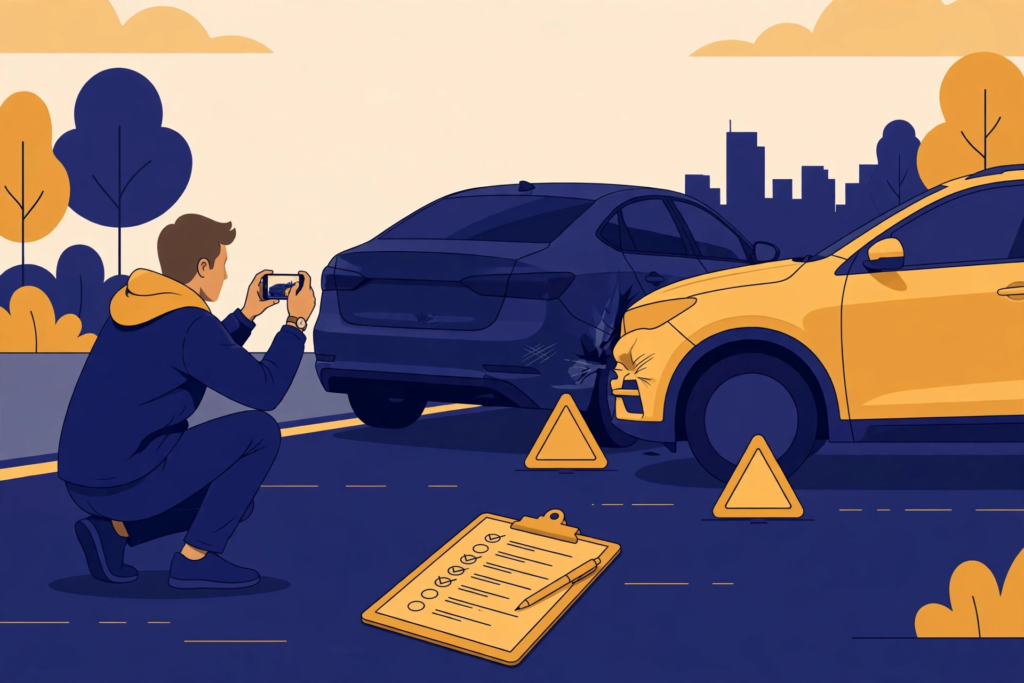
A car accident is disorienting — even a minor one. Your heart is pounding, traffic is honking, and you’re supposed to remember a checklist? That’s exactly why it helps to learn what to do after a car accident *before* it happens. This step-by-step guide covers the scene, the paperwork, the insurance claim, and the mistakes that cost people money.
At the Scene: The First 15 Minutes
1. Check for Injuries and Stay Safe
Your first job is safety, not paperwork. Check yourself and your passengers for injuries, then check the other party if it’s safe to do so. If anyone might be hurt, call 911 immediately — don’t try to diagnose; let professionals decide. If the cars are drivable and it’s safe, move them out of traffic to the shoulder. Turn on hazard lights and set out warning triangles or flares if you have them.
What to do after a car accident at a Glance
In a crash? Follow this step-by-step guide on what to do after a car accident — at the scene, with insurers, and filing your claim. Below, we break down what to do after a car accident in detail so you can act with confidence.
Table of Contents
2. Call the Police
Always call the police after an accident with injuries, significant damage, or any dispute about what happened. A police report creates an official, neutral record — invaluable for insurance claims and essential if the other driver later changes their story. In some states, you’re legally required to report accidents above a damage threshold. When officers arrive, stick to facts; don’t speculate about fault.
3. Exchange Information
Collect and share:
- Full names and contact information
- Driver’s license numbers
- Insurance company names and policy numbers
- License plate numbers
- Vehicle makes, models, and years
If the other driver won’t cooperate, note everything you can — plate number, vehicle description — and let the police handle it.
4. Document Everything
Your phone is your best tool at the scene:
- Photos of all vehicles from multiple angles, showing damage and positions
- Photos of the road, skid marks, traffic signs, signals, and weather conditions
- Photos of any visible injuries
- Notes on time, location, direction of travel, and what happened — written while it’s fresh
- Witness names and numbers — independent witnesses can decide disputed claims
More documentation is always better. Memory fades; photos don’t.
5. Watch What You Say
Be polite but careful. Don’t apologize or admit fault at the scene — even a reflexive “I’m sorry” can be used against you later. Fault is a legal and insurance determination, not something to settle on the roadside. Just exchange facts and let the process work.
In the Days After: Protecting Your Claim
Seek Medical Attention Promptly
Adrenaline masks injuries. Whiplash, concussions, and soft-tissue damage often surface hours or days later. See a doctor promptly after any meaningful impact — both for your health and because gaps in treatment give insurers room to argue your injuries weren’t accident-related. Keep every medical record and bill.
Notify Your Insurer Quickly
Most policies require “prompt” notification of accidents. Call your insurer within a day or two — even if the other driver was clearly at fault and you expect their insurance to pay. Early notification protects your rights under your own policy (including UM/UIM and MedPay benefits you might need).
Understand Whose Insurance Pays
- At-fault driver’s liability typically pays in most states
- Your collision coverage can repair your car regardless of fault (you pay the deductible, then your insurer may recover it from the at-fault party)
- No-fault states route injury claims through your own PIP coverage first
- Uninsured at-fault driver? Your UM/UIM coverage steps in — one more reason to carry it
Get Repair Estimates
Your insurer will arrange an inspection and estimate, but getting an independent estimate from a reputable shop gives you a useful benchmark. You generally have the right to choose your repair shop — insurers can suggest preferred shops but can’t force you to use them in most states.
Filing the Claim: Step by Step
1. Open the claim — call your insurer or file online; you’ll get a claim number and an assigned adjuster
2. Provide your documentation — photos, police report number, witness info, medical records
3. Cooperate with the investigation — answer the adjuster’s questions honestly; recorded statements are normal
4. Review the settlement offer — for vehicle damage, confirm the estimate covers proper repairs; for injuries, don’t settle until treatment is complete and you understand the full extent
5. Negotiate if needed — initial offers, especially on injury claims, are often starting points
6. Get everything in writing — settlement terms, timelines, and what’s covered
Dealing with the Other Driver’s Insurer
Their adjuster works for *them*, not you. Be factual and brief. You’re not obligated to give a recorded statement to the other party’s insurer, and you should never accept a quick settlement before you know the full extent of injuries or damage. When in doubt, consult a personal injury attorney — most offer free consultations for accident cases.
Mistakes That Hurt Your Claim
- Delaying medical treatment — gaps let insurers dispute causation
- Posting about the accident on social media — insurers and opposing lawyers look; a cheerful photo can undermine an injury claim
- Admitting fault at the scene or to adjusters before facts are established
- Accepting the first settlement too fast — especially for injuries, where costs unfold over months
- Forgetting diminished value — if your car was significantly damaged and repaired, it may now be worth less; in many states you can claim diminished value from the at-fault party
- Missing deadlines — statutes of limitations for injury lawsuits range from one to several years by state; don’t let time run out
Frequently Asked Questions
Should I call my insurance if the accident wasn’t my fault?
Yes. Notify your insurer promptly regardless of fault. Your policy likely requires it, and your own coverages (collision, UM/UIM, MedPay) may be involved even when the other driver pays.
Do I have to use the repair shop my insurer recommends?
In most states, no — you have the right to choose your shop. Insurer-preferred shops can be convenient (direct billing, guaranteed work), but the choice is yours.
How long does a car insurance claim take?
Simple property-damage claims often resolve in days to a few weeks. Injury claims take longer — weeks to months — because settlement shouldn’t happen until treatment concludes. Complex or disputed claims can take longer still.
What if the other driver has no insurance?
File under your own uninsured motorist coverage for injuries (and vehicle damage in states where UM includes property damage), or collision coverage for your car. Then consider whether pursuing the driver personally is worthwhile — often it isn’t, which is why UM coverage matters.
When should I hire a lawyer after an accident?
Consider one for significant injuries, disputed fault, denied claims, or lowball settlement offers. Most personal injury attorneys work on contingency (no upfront cost) and offer free consultations — getting advice costs nothing.
The Bottom Line
What you do after a car accident shapes everything that follows: prioritize safety, call the police, document thoroughly, get medical care promptly, notify your insurer quickly, and never rush a settlement. The drivers who recover best — financially and physically — are the ones who treat the aftermath as a process, not a panic. Bookmark this guide, keep emergency numbers in your phone, and make sure your coverage is solid *before* you need it. Compare car insurance quotes today — the right policy, with strong liability and UM/UIM limits, is what turns a bad day into a manageable one.
Want the full picture on what to do after a car accident? Start with the Insurance Information Institute’s claims guide for the official rules, then work through the related guides below for practical what to do after a car accident money-saving steps.