
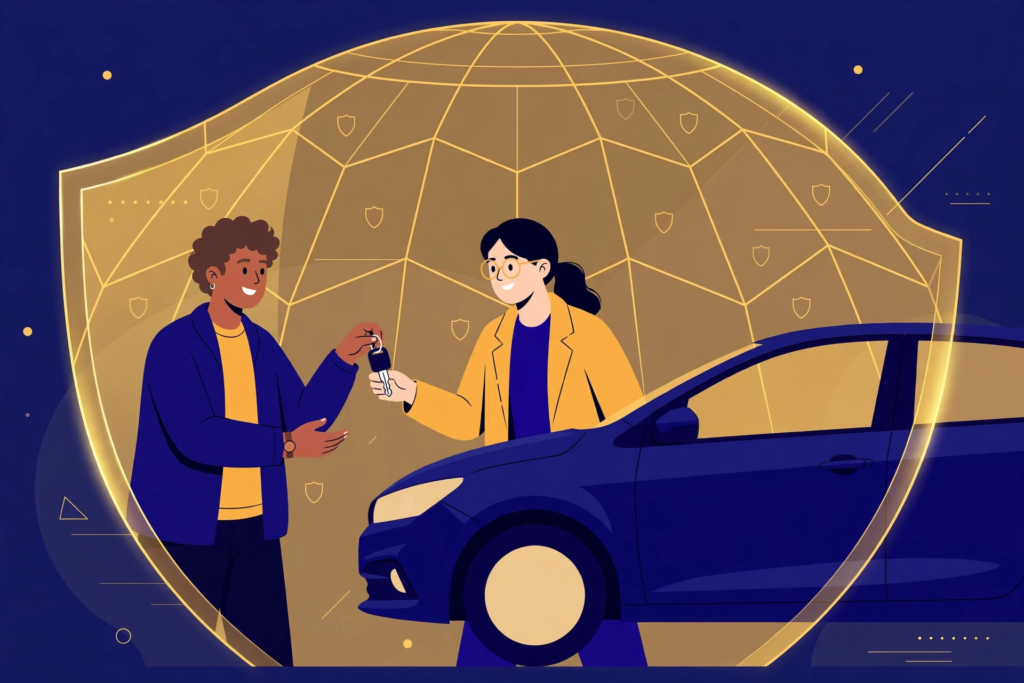
You don’t own a car — so why would you need car insurance? It’s a fair question, and the answer surprises a lot of people: there are several common situations where not owning a vehicle doesn’t mean not needing coverage. Non-owner car insurance fills exactly that gap. It’s affordable, straightforward, and for the right person, essential.
What Is Non-Owner Car Insurance?
A non-owner policy provides liability coverage — bodily injury and property damage — for drivers who don’t own a vehicle. When you borrow a friend’s car, rent a car, or use a car-sharing service, the non-owner policy steps in to cover your liability if you cause an accident.
Non-owner car insurance at a Glance
Don’t own a car but need coverage? Learn what non-owner car insurance covers, what it costs, and who should buy it in 2026. Below, we break down non-owner car insurance in detail so you can act with confidence.
Table of Contents
Think of it as liability insurance that follows *you* instead of a *car*. Standard auto policies attach to a vehicle; non-owner policies attach to a person.
What It Covers
- Bodily injury liability — injuries you cause to others while driving a borrowed or rented car
- Property damage liability — damage you cause to other people’s property
- Often includes uninsured/underinsured motorist and medical payments depending on the state and insurer
What It Doesn’t Cover
- Damage to the borrowed car itself — non-owner policies don’t include collision or comprehensive, so if you wreck your friend’s car, their policy (or your wallet) handles the vehicle damage
- Your own injuries beyond MedPay/PIP limits — it’s primarily liability protection for others
- Cars you own — the moment you buy a car, you need a standard policy
- Vehicles available for your regular use — like a roommate’s car you drive daily; insurers expect those situations to be on a standard policy
- Commercial driving — no rideshare or delivery coverage
Who Needs Non-Owner Insurance?
Drivers Between Cars
Sold your car but still drive occasionally? A non-owner policy keeps you continuously insured — which protects you from the coverage-lapse penalty when you buy your next car and need a standard policy again.
People Who Frequently Borrow or Rent Cars
If you regularly borrow a family member’s car or rent for trips, relying solely on the car owner’s policy is risky. Their liability limits might be low, and any claim you cause hits *their* record and premiums. Your own non-owner policy provides a second layer and keeps your borrowing from burdening the owner’s policy.
Drivers Who Need an SR-22 but Don’t Own a Car
One of the most common uses: license reinstatement after a DUI or suspension often requires an SR-22 filing, which requires an insurance policy. A non-owner SR-22 policy satisfies the filing requirement without requiring vehicle ownership.
Car-Sharing Users
Frequent users of car-sharing services get some coverage through the platform, but it’s often minimal. A non-owner policy supplements it with higher liability limits for a modest cost.
New Drivers Building History
Some new drivers use non-owner policies to establish continuous insurance history before buying their first car — which can lead to better rates on that first standard policy.
How Much Does Non-Owner Insurance Cost?
Non-owner policies are among the cheapest insurance products available — typically a fraction of a standard policy’s cost, since there’s no specific vehicle to insure for collision or comprehensive. Exact pricing depends on your driving record, location, and chosen liability limits, but most drivers find it very affordable, often comparable to a modest monthly subscription.
Getting the Best Price
- Choose sensible liability limits — don’t default to minimums if you have assets to protect; the price difference between minimum and robust limits on a non-owner policy is usually small
- Shop multiple insurers — not all companies offer non-owner policies, so compare among those that do
- Ask about discounts — good driver, paid-in-full, and paperless discounts often apply
Non-Owner vs. Other Options
vs. Being Added to Someone’s Policy
If you live with the car owner and drive their car regularly, being added as a listed driver on their policy is usually more appropriate — and sometimes required. Non-owner policies are for *occasional* use of non-owned cars.
vs. Rental Car Insurance
Rental companies sell liability and damage waivers at the counter for a steep daily price. A non-owner policy covers your liability far more cheaply across all rentals — though you’ll still want to consider the rental company’s damage waiver (or a credit card benefit) for the rental car itself, since non-owner policies don’t cover vehicle damage.
vs. Just Risking It
Driving borrowed cars with no insurance of your own means any accident you cause lands entirely on the car owner’s policy — their rates, their record, their liability limits. If damages exceed their limits, the injured party can come after *you* personally. A non-owner policy is cheap protection against that scenario.
Frequently Asked Questions
Can I get non-owner insurance with a bad driving record?
Yes. Non-owner policies are available to high-risk drivers, and they’re commonly used alongside SR-22 filings. Expect higher premiums reflecting your record, but coverage is obtainable.
Does non-owner insurance cover rental cars?
It covers your *liability* when driving a rental — injuries and damage you cause to others. It does not cover damage to the rental car itself; for that, consider the rental company’s waiver or credit card coverage.
How do I switch from non-owner to a standard policy?
When you buy a car, contact your insurer to convert or replace the non-owner policy with a standard one covering the vehicle. Do this before driving the new car — and enjoy the continuous-coverage history you’ve built, which helps your new rate.
Will a non-owner policy prevent a coverage lapse on my record?
Yes — that’s one of its main benefits. Continuous insurance history, even via a non-owner policy, avoids the lapse penalty insurers apply when you return to standard coverage.
Can I buy non-owner insurance if I live with someone who owns a car?
Usually only if you don’t have regular access to that car. If a housemate’s vehicle is available for your daily use, insurers typically require you to be listed on their policy instead.
The Bottom Line
Non-owner car insurance is a small, smart product for a specific set of people: borrowers, renters, drivers between cars, and anyone needing an SR-22 without vehicle ownership. It costs little, prevents coverage lapses, and keeps your accidents off other people’s policies. If you drive cars you don’t own with any regularity, get a quote — it’s one of the cheapest ways to protect yourself on the road. Compare non-owner car insurance quotes today and close the gap in your coverage.
Rules and rates change, so double-check the details of non-owner car insurance with the National Association of Insurance Commissioners. For more ways to save, keep reading the guides linked below.