
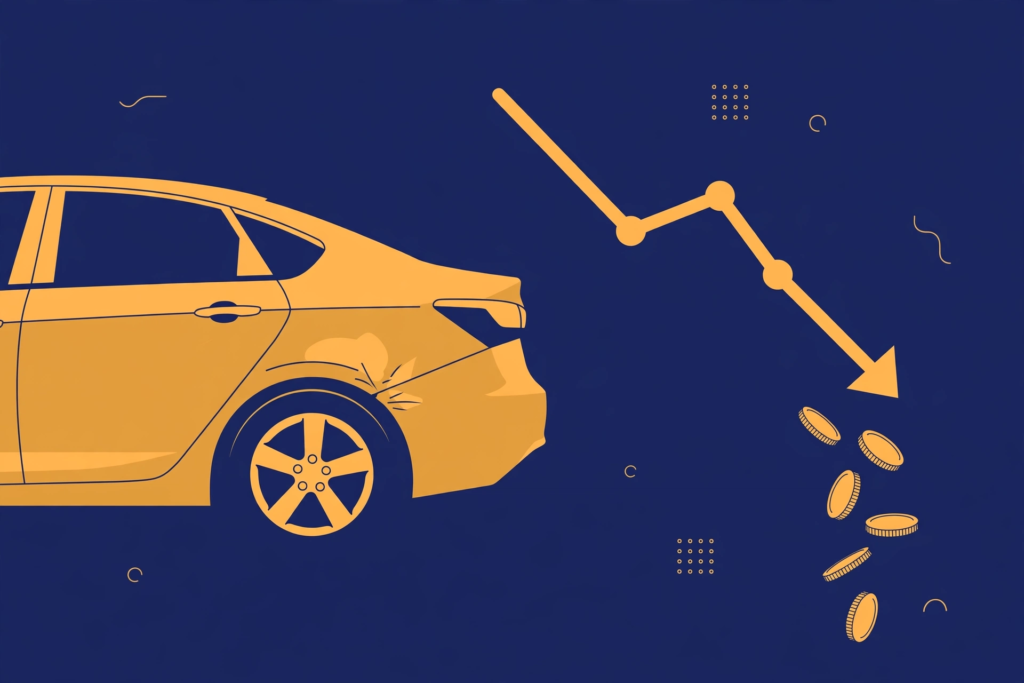
Your car was repaired after the accident, and it looks as good as new. But here is the problem: it is not worth what it was before the crash. A vehicle with an accident on its history report sells for less than an identical clean-history car — and that lost value is real money out of your pocket. A diminished value claim is how you get compensated for it.
Most drivers have never heard of diminished value, and insurers certainly do not volunteer the information. Here is how diminished value claims work, when you can file one, and how to maximize your recovery.
Diminished value claim at a Glance
What is a diminished value claim? Learn how to file one after an accident and recover the resale value your car lost — even after repairs. Below, we break down diminished value claim in detail so you can act with confidence.
Table of Contents
- Diminished value claim at a Glance
- What Is Diminished Value?
- When Can You File a Diminished Value Claim?
- How to Calculate Diminished Value
- How to File a Diminished Value Claim: Step by Step
- Common Insurer Pushback — and How to Respond
- Tips to Maximize Your Diminished Value Recovery
- Frequently Asked Questions
- The Bottom Line
What Is Diminished Value?
Diminished value is the difference between your car’s market value before an accident and its market value after repairs. Even with flawless repairs, a car that has been in a reported accident is worth less because buyers — and dealers — discount vehicles with accident history. Vehicle history reports make this history visible to every future buyer.
The Three Types of Diminished Value
- Inherent diminished value: the most common type. It is the automatic loss in market value simply because the car now has an accident history, regardless of repair quality.
- Repair-related diminished value: additional loss caused by imperfect repairs — mismatched paint, non-OEM parts, or lingering mechanical issues.
- Immediate diminished value: the difference between the car’s pre-accident value and its value immediately after the crash but before repairs. This is rarely claimed on its own.
Most diminished value claims focus on inherent diminished value, since it applies even when repairs were perfect.
When Can You File a Diminished Value Claim?
Diminished value claims are most commonly filed as third-party claims against the at-fault driver’s insurance. The rules depend on your state:
- Most states allow third-party diminished value claims. If someone else caused the accident, you can generally claim diminished value from their insurer.
- First-party claims (against your own insurer) are harder. Many policies exclude diminished value under collision coverage, though a few states allow it. Check your policy language.
- Some states limit or bar these claims. A handful of states do not recognize diminished value claims in certain circumstances, so state law matters.
Diminished value claims make the most sense when:
- The other driver was at fault
- Your car is relatively new or holds its value well (luxury cars, popular models)
- The damage was significant enough to appear on a vehicle history report
- Your car was in good condition before the accident
On an older, high-mileage car with minor damage, the diminished value may be too small to justify the effort — but it costs nothing to estimate it.
How to Calculate Diminished Value
There is no single official formula, but these approaches are commonly used:
The 17c Formula
Originating from a Georgia court case, the “17c” formula starts with 10% of your car’s pre-accident value as a baseline cap, then applies multipliers for damage severity and mileage. Insurers often use this formula because it tends to produce conservative numbers — which is exactly why you should not accept it uncritically.
Comparable Market Analysis
A stronger approach: compare actual sale prices of vehicles like yours with and without accident history. A professional diminished value appraisal does this systematically, pulling comparable listings and sales data to document the real market difference. This evidence-based method is far more persuasive in negotiations.
Professional Appraisals
Independent appraisers specialize in diminished value reports, typically charging a flat fee. Their reports carry weight with adjusters because they are built on market data rather than formulas. For higher-value vehicles, an appraisal often pays for itself many times over.
How to File a Diminished Value Claim: Step by Step
Step 1: Confirm Your Eligibility
Verify that your state allows third-party diminished value claims and that the accident was the other driver’s fault. Gather your repair records and the police report.
Step 2: Document Your Car’s Pre-Accident Value
Pull together evidence of what your car was worth before the crash: Kelley Blue Book or similar valuations, comparable listings, maintenance records showing good condition, and any recent appraisals. The better your documentation, the stronger your claim.
Step 3: Get a Diminished Value Appraisal
For claims worth pursuing seriously, hire an independent appraiser. Their report should detail the pre-accident value, the post-repair value, and the methodology. This becomes the foundation of your demand.
Step 4: Send a Demand Letter to the At-Fault Insurer
Write a formal demand letter including the accident details, your appraisal report, supporting documentation, and the specific dollar amount you are claiming. Be professional and factual — this letter may become evidence if the claim goes further.
Step 5: Negotiate
The insurer will likely respond with a lower number, often based on the 17c formula or a quick internal estimate. Counter with your market-data evidence. Negotiation is normal; the first offer is rarely the final one.
Step 6: Escalate If Necessary
If the insurer refuses to pay a reasonable amount, options include filing a complaint with your state’s department of insurance, using small claims court (which handles many diminished value disputes), or consulting an attorney for larger claims.
Common Insurer Pushback — and How to Respond
- “Repairs restored the car to pre-accident condition.” True physically, but irrelevant to market value — buyers still pay less for accident-history cars, and market data proves it.
- “Our formula says the value is X.” Formulas are starting points, not market reality. Comparable sales data beats a formula every time.
- “Diminished value isn’t covered.” They may mean under your own policy — but as a third-party claimant against the at-fault driver, state law is what matters.
- Delays and lowball offers. Persistence and documentation win. Insurers count on claimants giving up.
Tips to Maximize Your Diminished Value Recovery
- File your diminished value claim separately from the repair claim, after repairs are complete
- Keep every receipt, photo, and record from the original accident
- Use OEM parts for repairs when possible — it supports your value argument
- Get the appraisal from an independent professional, not someone affiliated with an insurer
- Act within your state’s statute of limitations — do not let the claim expire
Frequently Asked Questions
What is a diminished value claim?
It is a claim for the loss in your vehicle’s market value caused by an accident history — the difference between what your car was worth before the crash and what it is worth after repairs, even when the repairs were done well.
Can I file a diminished value claim against my own insurance?
Usually it is much harder. Most policies exclude diminished value under first-party collision coverage. Diminished value claims are typically filed against the at-fault driver’s insurance as a third-party claim.
How much is a diminished value claim worth?
It varies widely — from a few hundred dollars on an older car with minor damage to many thousands on a newer or luxury vehicle with significant damage. A professional appraisal based on comparable sales gives the most accurate figure.
Do I need a lawyer for a diminished value claim?
Not usually. Many claims are resolved through demand letters and negotiation, and small claims court handles disputes efficiently. For high-value vehicles or stubborn insurers, an attorney consultation can help.
How long do I have to file a diminished value claim?
Your state’s statute of limitations for property damage claims applies — commonly two to three years from the accident date. Do not wait until the deadline approaches; evidence is freshest early on.
The Bottom Line
A diminished value claim recovers money that is rightfully yours — the hidden cost of an accident that repairs alone do not fix. If someone else damaged your car, do not leave that money on the table. Document your vehicle’s value, get a professional appraisal for significant claims, and negotiate firmly. And while you are thinking about claims, take a few minutes to compare car insurance quotes: the right policy — with strong uninsured motorist coverage and fair claims handling — protects not just your car, but its value. That is coverage worth shopping for.
For official guidance on diminished value claim, see the Insurance Information Institute’s claims guide. And if this breakdown helped, the related guides below go deeper on diminished value claim saving strategies you can use right away.